Transport Options
Boat, bus, plane, train or car – take your pick. The whole range of transport options are here somewhere but it depends where you want to go because some, such as the rail network, are very limited. The most common options – and those which will allow you to cover the most destinations – are car and bus.
Bus and Coach
Regular services - Regular bus services are common, regular and efficient around the major towns and cities and some of them are even free for looped routes such as the circuit bus in Auckland.
Timetables for urban services can easily be found at tourist information centres, bus stations, hostels and extensively online. Additionally there are national networks for longer distance travel. The main players here are Intercity and Naked Bus.
InterCity ([email protected]), whose route map connects more than 600 destinations countrywide, is the country's national bus network. Tickets can be bought at bus stations, online or at tourist i-Sites and expect discounts if you are a cardholder with one of the hostel membership schemes. InterCity also offer a range of season ticket and flexible ticket options which will definitely save you money if you plan to use buses a lot. Most passes are valid for 12 months and include the likes of the 'Travelpass' which offers a hop on and off fixed itinerary service and the 'Flexipass' where you buy travel by the hour and can top up just as you might a phone card.
Some tickets even include the price of the North/South islands ferry service or include a choice of adventure tour options.
Naked Bus (www.nakedbus.com) also serves both islands and although it doesn't have quite the coverage offered by InterCity it does offer a sleeper-bus service. As with InterCity there are a range of ticket options aimed at all those who intend to use the service over and again and are looking to save some money.
Bus and Coach Tours
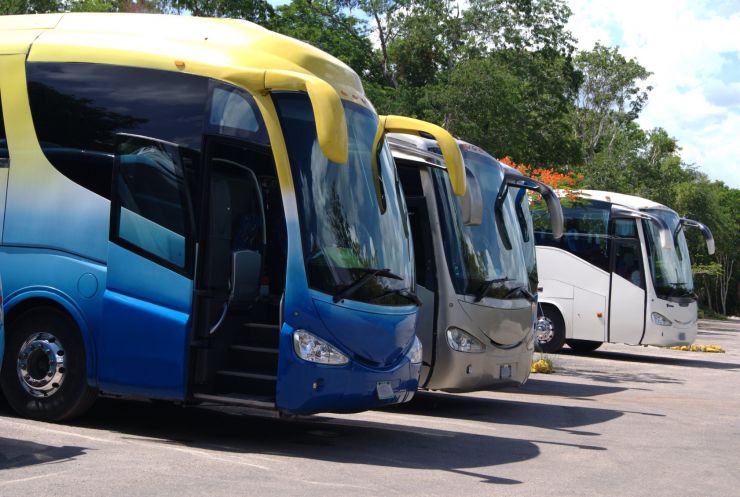
There are many packages available which offer an all-inclusive price for coach travel, accommodation and activities, ranging in length from a day to weeks. If you like everything planned out in advance this can be a good option. Flying Kiwi Adventures, whose tours focus on the great outdoors, are one of the leading companies. Hiking, cycling and exciting activity options are on the menu as well as possibilities for extending stays should you rock up somewhere you find it particularly hard to leave. Discounts are available for holders of YHA, VIP, ISIC and NOMADs cards.
Haka Tours – Are an all-inclusive, stress free option run in small groups with a crazily passionate kiwi guide to show you all the best bits of NZ. Because it’s a small group you can also customise your itinerary by adding optional activities. As well as advernture tours of both islands they also offer snow and mountain biking tours for the adreneline junkies.
Backpacker and Hop On/Hop Off Buses
Lots of budget travellers/backpackers and an otherwise limited choice for getting from A to B has given rise to a plethora of backpacker bus services in New Zealand. Hop on/hop off services offer some real flexibility which marries up with the backpacker world perfectly. You might think you know exactly where you are going and then you meet some great people or learn about something to do/see which sounds like the best fun ever and all the best laid plans suddenly fall to pieces. Backpacker buses mean you can change your plans every day if you like and a bus load of like-minded people and potential buddies is all part of the potential for adventure.
The other great bonus here is that the hop on/hop off services are entirely tourist focused which means routes are often scenic (rather than purely a utilitarian means of travelling from one point to another), regular stops are made at sites of interest and there are often all kinds of activities on offer as you go.
As there are so many competing companies it is often a little tricky to narrow it down to the one you will use. However, a good starting point is to decide which locations and activities are absolute not-to-be-missed important to you and then pick the company which offers the best deal for that route and itinerary.
A few of the leading companies are listed here but there are plenty more with new ones springing up all the time. Additionally, there are loads of companies which cover a smaller and more specific area rather than the whole country.
Kiwi Experience – Kiwi Experience, the grandfather of all the hop on/hop off services which came after, offer a truly vast range of passes which run from 2 – 29 day tours. They now also operate the Magic Bus service too.
The Stray Bus – Enviro Gold endorsed by Qualmark, Stray’s hop-on hop-off network is for those looking for a more unique and adventurous trip. Visit all the iconic ‘must-see’ destinations along with some amazing off the beaten track destinations the average tourist won’t know about. They run North, South & National passes with loads of departures every week, all year round.
InterCity – Already discussed under regular bus services, InterCity also offer a hop on/hop off service among their other options.

Car
Car hire companies are as common as bus tour companies which means competitive prices and plenty of options for pick-up/drop off destinations if you're looking to rent a vehicle. However, should your stay in New Zealand be several weeks or months long you might want to consider buying a car or camper which will cost you considerably less in the long run. Buying and running a vehicle is comparatively cheap in New Zealand and because SO many travellers choose this option there is a steady flow of cheap vehicles for sale as each wave of travellers moves on to pastures new. Read our guide to 'Where to Buy a Second Hand Cars & Campers' to find out more.
Ride-shares are also a super common way of doing things for travellers. Hostel notice boards will often be full of scribbled notes from fellow travellers who are looking to get from A to B and want to share the costs of travel in a bought or hired vehicle.
Additionally, there is more than one ride sharing scheme which aims to connect car owners in possession of a spare seat or two with all those looking for a lift, some of which are aimed specifically at backpackers. These include Jayride, Lift Surfer and Grabaride.
Internal Flights
Flying everywhere is not typically a backpacker option within one country as costs are often prohibitive for those on a budget. However, in New Zealand there are some mega-cheap options possible.
The Air New Zealand 'Grab a Seat' service and reverse auction feature mean the flights are almost always sub NZ$100 and regularly snatched for a handful of dollars.
There are a surprisingly large number of small scale operators all over the country who offer a comparatively cheap means of getting to some of the more out-of-the-way places such as Great Barrier Airlines who fly out of Auckland to Great Barrier Island and Stewart Island Flights which make the run from Invercargill to Stewart Island.
Both Sounds Air and air2there.com offer low cost options for getting from Wellington to the South Island and offer an affordable alternative to the ferry services which connect the North Island and South Island.
Trains
Trains in New Zealand are really more about carrying freight than passengers. There is only one company which operates long distance passenger services - Kiwi Rail's 'Scenic Journeys' passenger division. Routes are limited to -
- Northern Explorer: Auckland-Wellington-Auckland train service
- Coastal Pacific: Christchurch–Picton–Christchurch train service
- Tranz Alpine: Christchurch–Greymouth–Christchurch train service
There are also suburban train services for both Auckland and Wellington.
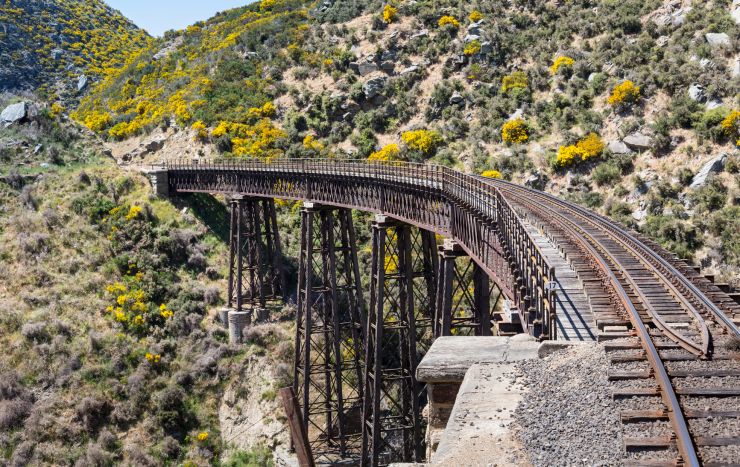
Limited the train option may be as a mode of transport but rail tracks follow some stunning routes where gawping at the scenery will leave you breathless. Impossibly high iron bridges over ravines and the like are all part of the adventure. Some people book themselves a ride as an experience in itself and with commentary, large viewing windows and an open-air carriage for taking in the surroundings at a full 360 degrees, it's not hard to see why.
Ferries and Water Taxi
There are a few ferry services in New Zealand with by far the most well-trodden route being that of the Cook Strait crossing between Wellington on the North Island to Picton on the South Island. Two companies operate this route ferrying both foot-passengers and vehicles – Interislander and Bluebridge
If you make the crossing in daylight expect to be blown away by the sheer beauty of it all which presents your eyes with every shade of blue and green imaginable. Dolphin and whale sightings are a common free bonus of many crossings. There is also a catamaran service which ferries passengers across the Foveaux Strait between Bluff and the incredible Stewart Island - www.stewartislandexperience.co.nz - while Great Barrier Island bound folk can hop aboard another car/passenger ferry from Auckland – www.sealink.co.nz.
As well as larger ferries there are a number of water taxi services which can be found dotted all over both islands. Often as much a joy ride as a transport service, water taxis are particularly common around the Tasman/Nelson/Marlborough regions where often there are no roads and boats are the only way to arrive in many places.